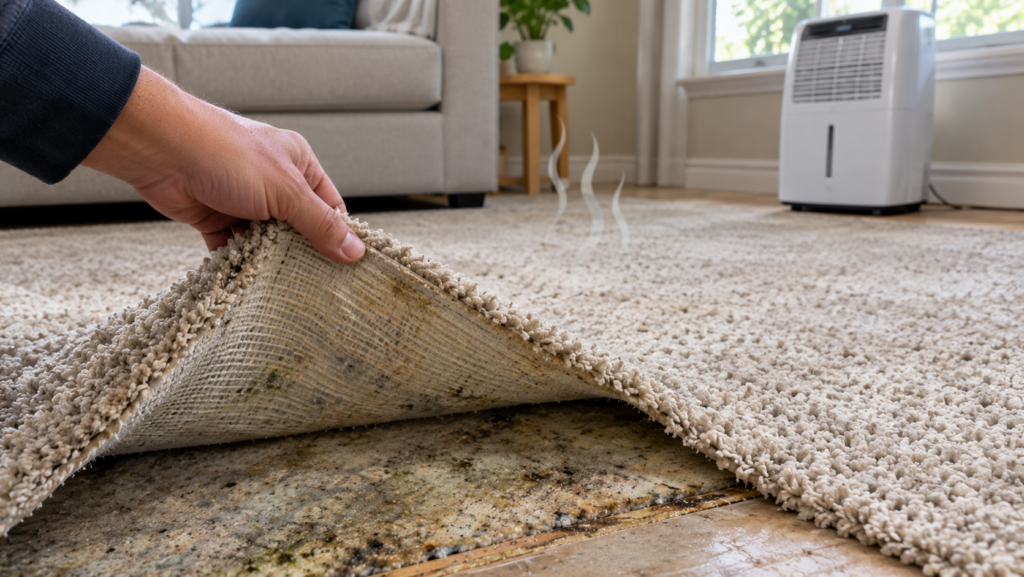
You dealt with the spill, the leak, or the storm water. You ran fans, maybe rented a wet vac, and the carpet feels completely dry to the touch. Then, a few days later, that smell shows up: damp, sour, musty, like a closed-up basement.
It is one of the most frustrating problems homeowners deal with, and one of the most common questions we hear: My carpet is dry. Why does it still smell like mildew?
The short answer is that a carpet that feels dry on top is not always dry underneath. Mildew odor is a signal that moisture, organic material, or microbial growth is still present somewhere in the carpet system: the fibers, the backing, the padding, or the subfloor. In this guide, we’ll cover what is actually causing the smell, which fixes work, which ones only mask the problem, and when the issue has moved beyond carpet cleaning.
What That Mildew Smell Actually Is
That musty odor is not the smell of old carpet. It typically comes from microbial volatile organic compounds (MVOCs), gases released by mildew and mold as they grow and feed on organic material. Carpet fibres, dust, skin cells, pet dander, and padding all give them something to feed on. All they need to get started is moisture.
This matters because it changes how you should think about the fix. You can’t remove a smell that is being actively produced. If the odor keeps coming back, something in or under the carpet is still damp enough to support growth.
8 Common Reasons Your Carpet Smells Like Mildew After Drying
1. The Padding Never Fully Dried
This is the number one cause. Carpet padding acts like a sponge and sits under a layer of carpet that restricts airflow. You can dry the top of the carpet in a few hours, while the padding underneath stays damp for days. Surface drying, fans pointed across the room, and even a dehumidifier often aren’t enough to pull moisture out of dense padding.
2. Moisture Is Trapped in the Subfloor or Concrete Slab
Wood subfloors and concrete slabs hold water and release it slowly. In many South Texas homes, carpet is installed directly over a concrete slab. If that slab absorbed water from a leak or flood, or is wicking ground moisture upward, it keeps feeding humidity into the padding long after the carpet surface feels dry.
3. The Carpet Was Dried Too Slowly
Mold and mildew can begin growing on damp materials within roughly 24 to 48 hours. If a wet carpet sat for a day or two before it was properly extracted and dried, growth may have started even though everything looks and feels dry now.
4. High Indoor Humidity
Carpet can hold odor-causing moisture without ever being “soaked.” In humid climates, indoor relative humidity above roughly 60 percent gives mildew the conditions it needs. If your home runs humid, especially in closets, lower-level rooms, or rooms with poor airflow, carpet can smell musty without a specific water event.
5. Hidden Leaks Nearby
A slow leak from a supply line, water heater, AC condensate line, or window can keep dampening the same patch of carpet from underneath. Because the source is hidden, the smell returns every time you “fix” it, which is a sign you are treating a symptom rather than the cause.
6. A Previous Water Event Was Cleaned With Too Much Water
Ironically, DIY cleaning can be the culprit. Over-wetting carpet with a rented machine or heavy shampooing can push moisture down into the padding, where it dries slowly. This is why professional cleaning relies on strong extraction and controlled moisture levels.
7. Pet Accidents or Organic Contamination
Not every musty smell is purely mildew. Pet urine, spilled food, and drink residue can soak into padding and create bacterial odor that mimics or compounds the mildew smell. Moisture plus organic residue is a perfect combination for persistent odor.
8. Poor Ventilation and Airflow
Rooms with closed doors, furniture pushed tight against walls, or no air movement trap humid air at carpet level. Without airflow, even small amounts of moisture linger.
How to Tell Whether the Problem Is in the Carpet or Under It
Before you spend money on deodorizers or another cleaning, run a few simple checks:
- The press test: Press a paper towel firmly into the carpet and hold it for 30 seconds. If it comes up damp, there is moisture present.
- The smell-location test: Lower your nose near the carpet in different spots. If the odor is strongest in one area, the source is likely localized, such as a leak or a saturated patch of padding.
- The corner test: Carefully lift a corner of the carpet at the wall. Look at the padding and the back of the carpet for dark spots, discolouration, or a damp feel.
- The weather test: If the smell gets noticeably worse on humid or rainy days, the problem may be humidity or moisture wicking up from the slab.
- The rule-out test: Run the AC and a dehumidifier for several days. If the smell fades while the humidity is low and returns when humidity rises, you likely have lingering moisture rather than dead, odor-causing material that needs removal.
Fixes That Work
What Works
1. Professional hot water extraction – A professional cleaning removes the soil, residue, and moisture that feed odor, and it is done with controlled water use so the carpet dries quickly. If the smell is limited to the carpet fibers, this is often enough.
2. Improving drying and airflow – Use box fans to move air across the floor, run a dehumidifier to bring indoor humidity down, and open doors so air circulates. The EPA’s guidance on moisture control recommends keeping indoor humidity low and drying wet materials promptly, because moisture control is the key to preventing mold and mildew growth.
3. Addressing the moisture source – No cleaning will last if a leak, humidity problem, or slab moisture issue keeps re-wetting the carpet. Fix the source first.
4. Replacing the padding – If the padding has been wet for more than a day or two, or it has a persistent odor, replacement is often the real fix. Padding is difficult to clean and impossible to fully dry once saturated and contaminated.
What Doesn’t Work
- Baking soda or powder deodorizers alone – They may absorb surface odor for a day, but they do nothing about the moisture or growth producing it.
- Scented sprays and air fresheners – These cover the smell without removing the cause, and the odor returns.
- Steam cleaning repeatedly – More water on a carpet that already has a moisture problem can make things worse.
- Waiting it out – Mildew does not go away on its own. It tends to spread as long as conditions remain favourable.
When the Mildew Smell Means It’s Time for Water Damage Restoration
Sometimes the smell is a sign that the problem is bigger than the carpet. Call a restoration professional instead of rebooking another cleaning if:
- The smell returns within days of cleaning
- The carpet or padding got wet from a flood, storm, burst pipe, or sewage backup
- You see dark staining, warping, or discoloration on the carpet backing, baseboards, or walls
- The odor is strong in one area and may point to a hidden leak
- Anyone in the home has more respiratory irritation, coughing, or allergy-like symptoms indoors
- Water sat on the carpet for more than 24 to 48 hours before it was dealt with
At that stage, you need moisture meters, thermal imaging, and industrial drying equipment to find where the water went and whether it reached the subfloor or walls. If you’re in South Texas, a local team offering water damage restoration in McAllen can locate hidden moisture, dry the structure properly, and tell you whether the padding and subfloor can be saved or need replacement. It is far cheaper to find out early than to deal with mold remediation later.
Why Ignoring a Mildew Smell Is Risky
Beyond the unpleasant odor, ongoing mildew growth can lead to:
- Health concerns: The CDC notes that exposure to damp and moldy environments can cause nasal stuffiness, throat irritation, coughing, wheezing, and eye or skin irritation in some people, and can worsen symptoms for people with asthma or mold allergies.
- Spreading damage: Mold can move from carpet padding onto baseboards, drywall, and furniture, turning a flooring issue into a structural one.
- Subfloor deterioration: Long-term moisture can stain, soften, or rot wood subfloors.
- Shorter carpet life: Carpet sitting over damp, breaking-down padding wears out faster and develops permanent odor and staining.
How to Prevent Mildew Smells in Carpet Going Forward
- Keep indoor humidity between roughly 30 and 50 percent, using a dehumidifier if needed
- Dry any spill or wet area within 24 hours, including the padding when possible
- Run the AC regularly, and make sure rooms have airflow
- Fix leaks quickly, including small drips from plumbing, windows, and AC lines
- Schedule professional carpet cleaning regularly so soil and residue don’t build up
- Use area rugs with breathable backing in damp-prone rooms instead of rubber-backed mats that trap moisture
Final Thoughts
A mildew smell in a carpet that “feels dry” is almost always a moisture problem, not a cleaning problem. The odor is telling you that something in the carpet system is still damp or has been damaged by earlier moisture. Cleaning can solve the issue when it is limited to the carpet fibers, but when the padding, subfloor, or a hidden leak is involved, a deeper fix is required.
The best approach is to test, identify the source, and match the solution to the problem. Don’t mask it, and don’t ignore it.
Dealing with a carpet that smells musty even after it dried? Contact Dowling Carpet Cleaning for a professional inspection and cleaning, and an honest recommendation on whether cleaning will solve it or the padding needs attention.
Leave a Reply